Top 10 Video Games of 2019

Here’s a fun piece of trivia for you: I played 99 different video games throughout 2019. If you averaged it out, that would mean I spent 3.69 days playing each one. That’s obviously inaccurate and meaningless, but it was a way to introduce the real topic: The Top 10 Video Games of 2019.

Like last year, I’m using more traditional criteria again: for a game to be given nominee status, I have to have beaten it, and it must have been released in the calendar year 2019. The fact that I have to have beaten a game to count it is harsher than most critics, but really, if I couldn’t be bothered to finish a game, would I have counted it anyway?

After whittling down the list of 99, I came out with a rather surprising 26 nominees. That’s actually a lot more than I expected. Mostly because I felt like I left a lot of big 2019 games unfinished. That said, TOP TEN, GO!

~ Honorable Mention ~
Monster Hunter World: Iceborne

Here’s the thing: as much as I enjoyed Iceborne, I don’t think it qualifies. It’s a 2019 release, and I beat it, but… it’s just a DLC expansion. I know that I make the rules, but I don’t know if I can allow this. I can certainly allow it an honorable mention, though!

All that aside, I think that Iceborne is really great. It adds a ton of value to Monster Hunter World, though it also has a price tag to match. There’s a whole new campaign, with tons of new monsters, and just as many new features. I already wrote a whole article about this one, so you can go and check it out. Iceborne is a little more difficult than I would like in my old age (it is called Master Rank, after all), but it was a lot of fun to dive back into MHW for a while.

~ 10 ~
The Legend of Zelda: Link’s Awakening

You know it’s a weird year when a Zelda game shows up on the bottom of my top ten list. There’s a reason for that, though. This Link’s Awakening is more or less a carbon copy of the Game Boy original. Yes, it looks and sounds different, but it’s almost exactly the same otherwise. And that’s fine, because the original is my personal favourite Zelda of all time, but I still would have liked to see a little more new/changed content.

Let’s put that behind us and talk about why I like this game. Link’s Awakening is my favourite Zelda for a reason: It’s got one of my favourite worlds ever. For my money, Koholint has more personality per square inch than any other Zelda. No part of the island seems sparse or boring, everything has a place and a purpose. The dungeons are probably my favourite set in the series as well; they’re all complex but very rarely tedious. Plus, it’s just completely weird, and I love that. Oh, and I guess the remade graphics and music are pretty astounding, too.

~ 9 ~
Pokémon Shield

True story: Pokémon Shield was under contention to get on this list for a long time. It was actually going to be number ten, and might have been ousted by Iceborne if I hadn’t relegated that to an honorable mention. But then I remembered that Max Raid Battles exist and suddenly it became a lot easier to place those last few titles.

Pokémon Shield (and Sword) are… They’re very standard Pokémon games. While they’re the first HD games in the series, they still feel a lot like handheld games. There’s the Wild Area, which is completely open and cool (and super laggy when you’re online), but the rest of the game is very constrained and limited. However, the new Pokémon introduced for generation VIII are generally really great, and the previously mentioned Max Raid Battles are super fun. Pokémon’s campaigns are usually very easy, and I’m not hardcore enough to stand a chance in mulitplayer battles, but Max Raid Battles split the difference by letting you and three other trainers (CPU or human) fight it out against a single super-powered Pokémon. It’s literally the only time in any Pokémon game that I go into a battle not knowing whether I will win or lose and I am so thankful for that. Sadly, I’m sure it’s a one-time feature and will go away next generation, so I’m going to really enjoy it while I can!

~ 8 ~
Yoshi’s Crafted World

There has been some contention online regarding where Yoshi’s Crafted World places in the ranks of Yoshi games. Lots of people seem to think it’s better than Yoshi’s Woolly World. I think those people are absolutely nuts because everything about Woolly World is excellent. But Crafted World is still a very good Yoshi adventure.

In a very general sense, Yoshi’s Crafted World is exactly what you’d expect from Yoshi: walk around, eat up enemies, chuck eggs at things, and find secrets. Only this game has a really creative and well-executed theme of being made entirely of crafts. Everything looks like it was assembled out of household objects and stationery. Not only is the aesthetic unique and enjoyable, but it also allowed for the designers to come up with all sorts of fun new stage gimmicks. Even the boss battles are all designed around what kind of material each boss is made out of. There are a few things that hold this game back from excellence (bad soundtrack, tedious collectibles), but I genuinely enjoyed the time I spent with it.

~ 7 ~
Dragon Quest Builders 2

When I played the first Dragon Quest Builders, I didn’t really feel it right away, and let it sit for like two years before picking it up again and beating it. When I played Dragon Quest Builders 2, I basically did nothing else with my free time between the start and end of it.

DQB2 is an incredible game. If you need a quick primer, it’s a Dragon Quest game that plays sort of like Minecraft instead of your typical JRPG. The first game is great as well, but DQB2 improves on it in basically every way and stands as a shining beacon of pure delight. What I really appreciated about it is that it does something that few games do: it makes NPCs feel important. For one, DQB2 gives you an AI partner who will help you collect materials and slay monsters. More importantly, building up the towns on the game’s islands will increase their populations. The people who move in will then have needs and wants of their own, but many of them will also contribute to the town by cooking, crafting, or fighting off invading monsters. Each town also has a major construction project central to the plot, and ultimately all the townspeople will rally together to help build it under your guidance. It’s really satisfying and provides a unique sense of community that you don’t typically get from single-player games. Oh and also it’s just really fun to be able to explore a Dragon Quest world in a more adventurey style. More, please.

~ 6 ~
Luigi’s Mansion 3

At their core, the Luigi’s Mansion games are very simple. Go here, suck up ghosts, go to next place, suck up ghosts, repeat until win. But what really makes them shine are all the little details in between those basic steps. And Luigi’s Mansion 3 absolutley nails those moments.

The first thing you’ll see when booting up Luigi’s Mansion 3 is a surprisingly long cutscene of Lugi, Polterpup, and all the rest going to a grand fancy hotel. Please note that the visuals are incredible; it is significantly better looking than any video game in the Mario franchise has a right to be. It’s also important to note that the characters are absolutely bursting with personality, everyone has these fun little character quirks and they’re all so entertainingly cartoony. There is a constant stream of gags that are consistently funny. All of these things persist for the duration of the game, and make it probably the single most charming video game I’ve played all year. That’s not to discount the gameplay by any means. While the ghost-to-ghost suck-’em-up business is repetitive and does get a little tiresome after a while, the boss ghosts were refreshingly unique, and I was constantly engaged by all the little environmental puzzles scattered throughout. Spoiler: the real reward for finding all the collectibles is the sense of satisfaction you get for figuring out how to collect them all.

~ 5 ~
Blaster Master Zero 2

Blaster Master Zero was one of my favourite early Switch games, a classic 80’s title that was thoroughly refined to make it more dynamic and playable. So when I heard that IntiCreates was making a sequel, I almost literally jumped out of my chair in joy.

You have to wonder, what could they do to make Blaster Master Zero better? Well, this sequel is really more of an “if it’s not broke, don’t fix it” kind of thing. The game is generally the same as before: a side-scrolling exploration platformer with top-down shooter levels mixed in for flavour. The one major refinement is the world map: now you don’t have to truck through every single area when you need to backtrack; you just choose a planet from a menu and you’re off! And that’s the other thing that really stood out to me: around each world are tiny little plantetoids that each host their own challenge stage. They’re all quite short, but tend to be tougher than anything on the main path, and it’s a lot of fun to figure out and conquer them all. Otherwise, BMZ2 is basically more of the same, and in that case, that’s a very good thing. Except for the waifu robot and plant woman with literal giant melons. Could’ve done without those.

~ 4 ~
Tetris 99

Everything on the list up until this point has been pretty well on-brand for me. They’ve literally all been sequels (and a remake) in long-running franchises that I’ve been crazy about forever. So here’s something a little different. A little.

Sure, you could call Tetris 99 a sequel. But that’s not the point. The point is that someone (Nintendo) finally made a Tetris game that has truly made me excited about Tetris. And how did they do it? By turning it into a battle royale game, where 99 players square off to see who will be the last one standing. It’s unexpectedly brilliant, and while I don’t put aside nearly enough time for it, I always have an absolute blast when I do sit down with it for a while. It’s got that insidious “just one more round” thing going on, where I always want to play another match because maybe this will be the time where I finally win. Did I mention it’s free to play? Sure, you can pay some money for a couple extra modes, but all the important content is free (though you do need a Switch Online subscription), so there’s really no reason not to play. All that is to say, while Tetris 99 is the game I’ve spent the least time with on this list, it’s made an absolutely huge impression on me and I’ll definitely keep going back to it until the servers die.

~ 3 ~
Fitness Boxing

If Tetris 99 is the game I spent the least time with, maybe I ought to talk a little about the game I spent the most time with in 2019. Well… is it really even a game? Certainly it has some game-like elements, but really it’s more of an exercise app. And yet here is, at Number 3.

There’s no doubt that this is the real wildcard entry on this list. It is in fact an exercise program of sorts, and more often than not I dreaded having to boot it up. But hear me out, there’s one thing about it that really makes it stand out from the rest: it worked for me. Fitness Boxing has been out for over a year now, and I am still using it regularly. Less now than I did through most of 2019 because reasons, but it still gets loaded up once or twice a week. Maybe it has more to do with my mindset for exercise being better than ever before, but I’m giving the software at least partial credit here. I still hate exercising, but I’ve found that (shadow)boxing is really my thing. It’s the exercise I hate least, and I find it engaging enough to keep me coming back consistently. I may not always be having fun while using the software, but Fitness Boxing has definitely helped me become happier on the whole by playing a huge role in improving my physical fitness level. Though it could really use a DLC pack to help freshen it up a bit.

~ 2 ~
Shovel Knight: King of Cards

Looking back, I am completely puzzled by the fact that I didn’t include Shovel Knight: Specter of Torment on my Top 7 list for 2017. It is, to this day, my favourite chapter in the Shovel Knight Treasure Trove. Perhaps I should have made that a Top 8 list?

So that was a weird tangent. I’m talking about the Shovel Knight campaign that came out in 2019, here. King of Cards! It’s really good! In fact, it’s excellent! While it doesn’t quite satisfy the same way that Specter of Torment did, it’s definitely my second-favourite, which I suppose makes it perfect to be slotted in at spot #2 on this list. To justify this placement: let’s talk gameplay. King of Cards is a 2D platformer like all the other Shovel Knights, but he’s got a unique tackle-and-bounce move that makes it feel appreciably different. It’s a bit hard to wrap your head around a first, but once you get going, it’s makes for silky-smooth gameplay that I’m sure would be an amazing speedrun to watch (spoiler: it is). Couple that with dozens of micro-stages, each with their own gimmick to test King Knight’s abilities, and you’ve got an absolute master class in game design. To top it all off, this is by a wide margin the most entertaining story in the Shovel Knight oeuvre. It’s legitimately funny, and I couldn’t help being totally charmed by King Knight, despite the fact that he is an insufferable dick.

~ 1 ~
Resident Evil 2 (2019)

And so, on this list that is almost entirely made up of sequels and remakes… Of course we have a remake of a sequel at the tip-top.

I know that you’re not going to believe it, but the honest truth is that I just don’t get especially excited about very many video game releases any more. But RE2 Remake was an exception. A huge exception. I was so very eager to get my hands on this game, and I was so very relieved when it turned out to be pretty much all I could have wanted. This is more a re-imagining than a straight-up remake, changing a few story beats here and there, messing with the locations of items and the way you progress. The gameplay also changed dramatically, going from static camera angles to the over-the-shoulder view that RE4 pioneered. Despite that, it doesn’t feel like it’s morphed into an action game, as the zombies are still generally slow and most players are going to find that ammo isn’t quite plentiful enough. I like just about every change made to this game, which is an amazing feat since the original RE2 is my sentimental favourite in the series. Capcom did a fantastic job reconstructing a classic video game, and I really hope that the magic works just as well when the RE3 remake releases this spring.
Ryan’s Big Weekend Adventure!

You know what I didn’t do over last weekend? Study enough.

“Well duh” you all say.

What I did do, however, was all sorts of other things. I want to write about them briefly.

Saturday I got a haircut. There’s a story there, but it’s probably fairly embarrassing for a party who is not me, which makes me feel like I ought not to tell it. So I won’t. Sorry for the tease.

After breakfast I did some coursework for a while. Good old responsible me. I took a break after a couple hours to go visit with my grandparents. They gave me several tins of baking and couple jars of soup. Nice! There’s another mildly embarrassing story here that I don’t think I’m entitled to tell to the internet at large. Aren’t you upset that I’ve gotten so considerate in my old age?

I went back home to do some more book learning, which lasted about an hour. All in all, I made it through about a quarter of the homework questions assigned in a cumulative three hours. That’s not great. I hate school and cannot wait for it to be done forever.

Over the course of the weekend, I “snuck in” just enough video games time to finish playing the Squaresoft PS1 classic, Threads of Fate. You’ve probably never heard of this game, because Squaresoft put out like a billion RPGs on the PS1, so a few of them had to fall through the cracks.

Threads of Fate is an alright game. It’s a dual-protagonist game, and the plot isn’t the most creative, but it’s fun. One character has you working towards world domination, while the other is searching for a way to revive his friend. The characters are mostly archetypes, but they have big personalities and a really good script, so I ended up liking most of them quite a lot. Also the soundtrack is darn good, and the graphics are top-tier for a 3D game on the original Playstation.

However! The gameplay is… questionable. The controls, physics, and hit detection are all just a little bit off. This makes any precision-platforming sections much harder (and frustrating) than they ought to be. Combat is mostly a non-issue, but several bosses are stupidly hard until you figure out the right rhythm to beating them. Overall, it’s not a game that needs a remaster so much as a tune-up.

I also frittered away a whole three hours on Pokémon GO on Sunday, as it was January’s Community Day. Got a whole stable full of shiny Piplups, and that’s really about all. While I was out, I also got to try all of the fancy new “dream donuts” that Tim Horton’s is currently selling. I’ll type up a full thing about them (probably), but the TLDR is that they were not so good that I was able to justify having eaten three donuts in a single sitting. Oink oink.

After all that, I ended Sunday evening the same way I always do: playing an hour of Rocksmith, then watching TV while I do my laundry. This week was devoted catching up on some AGDQ runs, while at the same time trying to fill out a little bit of my Pokédex in Pokémon Shield. I’m at 387 of 400. Almost there!

And that was my weekend. If you think I sound like an incredibly boring individual… you’re right! And I wouldn’t have it any other way.

Insufficient Whippage

I’m not the kind of person who will base a game’s value on how long it takes to beat it. That’s a silly way to measure it. I used to think that way, though, back when everyone else did, and sometimes that mindset does manage to creep back in.

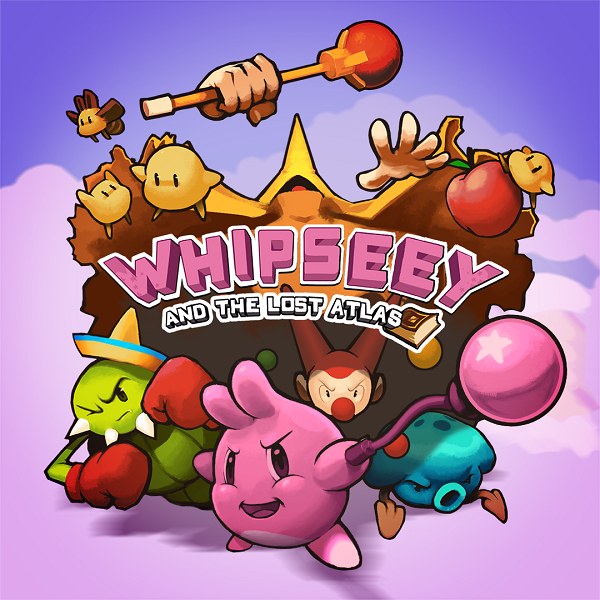
Enter Whipseey and the Lost Atlas. This is a cute little game that I’ve had on my eShop wishlist since whenever it was released. At a measley $8, it’s actually a wonder why I didn’t just purchase it right away. After all, it’s a platformer that looks strikingly like a Kirby game, so you would think that I’d be the target demo here.

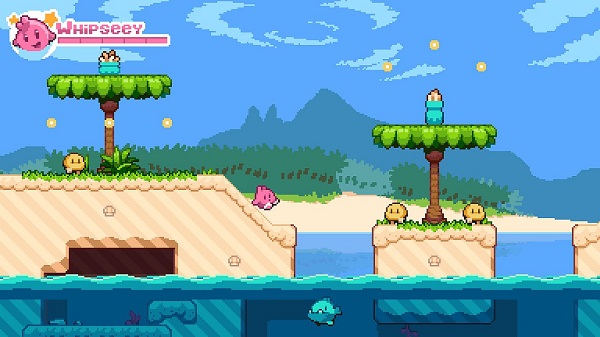
But no, I waited until it was half-price, and despite my greatest efforts, I can’t help but feel like I overpaid. Whipseey is exactly what it appears to be: a straightforward little platformer where your key verbs are “jump” and “whip.” This is fine. The controls are fairly solid, and I really do appreciate the simple, colourful graphics. That’s where my praise ends.

Whipseey doesn’t really seek to excel or innovate in any way. And I can relate to that; you could say the same thing about me. But the problem is that it doesn’t make for the most fun game. Once you’ve jumped over a hole, whipped an enemy, and then whip-grappled over a hole, you’ve seen pretty much everything the game has to offer. There are no power-ups, no gimmick stages, no new abilities. Whipseey almost never even uses its mechanics to do interesting things. There are exactly two screens where you need to bounce off a monster to clear a gap, and one screen where you need to use more than a single grapple point. I guess the TLDR of it is that Whipseey has a lot of untapped potential, and that makes it more disappointing than outright bad. Which adjective is worse is subjective.

The other thing about Whipseey is that it is short. Like, 30 minutes long at the absolute maximum. It’s five stages long, and each stage is comprised of about a dozen rooms and a boss. When I got to the end, I quite literally did a double-take and exclaimed “What? That’s it!?” I can’t in good conscience fault Whipseey for being so short, as Kirby’s Dream Land is roughly the same length, and I quite enjoy that game. The problem lies in the fact that it’s somehow even shallower than Kirby’s Dream Land, a game in which you can literally just fly over pretty much everything.

Did I at least enjoy my brief time playing Whipseey? It’s actually hard to say. I’ve been mulling it over for a while, and on one hand, there’s barely anything there. The level design is mostly the same throughout each world, really only beginning to get creative in world 5. On the other hand, it’s colourful and responsive and seems to be very competently built. So I guess that my opinion is thus: it is an objectively fine game, but subjectively it feels very much lacking.

While I’m obviously dancing around having to say “I didn’t like it” as much as I can, it’s not hard to say that I absolutely wouldn’t recommend it. Unless you’re buying it as Baby’s First Video Game. And I’m not being dismissive or elitist when I say that. I genuinely think this game would be best suited for a kid who’s new to video games. Anyone else will likely just be bored.

And it just really bothers me that Whipseey is spelled with two E’s. Weird.

How Else Would I Start The Year?

It’s the beginning of a new year, and three days from the start of Awesome Games Done Quick 2020. So I’ve got new year traditions and video game speedruns on my mind, which can only mean one thing:

It’s time to play Mega Man X.

I’m sure I mention it every year, but I like for MMX to be the first game I play through every year. I also really want to get myself to a point where I can finish it in under an hour. That said, I haven’t played it in exactly one year, so… I was a little rusty when I did my annual run yesterday.

Before we get into it, I should also note that I play what I like to call the 99% run. Which is to pick up all the upgrades in the game except for the hadouken, because it’s a pain and very slow to get. I don’t dare run any% because I need all those hearts and armor parts. I’m very bad at the final boss fights.

I reset not one minute into my run because I got a little too excited and tried to get a quick kill on the first bee blader, but apparently my mashing technique is much too slow, and I just died. Whoops. Maybe I ought to just try to play quickly instead of very fast.

Things actually got worse on the second attempt. I died to both chill Penguin and Launch Octopus because I was being stupid. I also feel down a hole in Chill Penguin’s stage, but that one was at least partly because of the Switch Pro controller’s mushy d-pad. I was trying to jump over the hole with the ride ride armor, but the game instead had me jump out of the ride armor, which threw me off and I ended up in the hole. It was dumb. Real dumb.

The other really big oops was when I frigged up getting the arm parts in Flame Mammoth’s stage. I thought, oh no big deal I’ll just get them from Zero later. But then I was in Boomer Kuwanger’s stage and I couldn’t charge Shotgun Ice to get to the heart tank, forcing me to replay nearly the whole stage. That was a pretty massive time loss.

I actually got through the Sigma stages pretty cleanly. Bosspider was nicer than ever, and didn’t even throw any babies at me. Then I got killed bu D-Rex because I always get killed by D-Rex. Don’t know why, but I just can’t manage that fight.

By the time I got to the final showdown, I only had 1.5 of four sub tanks full, and decided that I was already over my hour, so I spent three minutes grinding caterpillars for health drops. Then I had the best Velguarder fight of my life, a sloppy Sigma fight, and a halfway decent fight against Wolf Sigma. I only ended up needing two sub tanks, so that’s something to consider for my next run.

My final time came in at 1:07:14. Not a horrible time by any means, but I know I can do better. Four deaths is a lot, and I should have been able to avoid all of them. We’ll see what 2021 brings!

Monthend Video Game Wrap-Up: December 2019

~ Game Over ~

Spyro 3: Year of the Dragon (PS4) – So, it’s really weird that the final boss battle (and then the real final boss) had absolutely no fnafare at all. You just walk in the door and then the fight begins. No cutscene, no dialogue, nothing. Very jarring considering how much “story” the rest of the game had. Also, now that the trilogy is over, I think I’m happily done with all things Spyro for the rest of my life. 85% of my enjoyment with these games was watching the scoreboards fill up with 100%s.

Trover Saves the Universe (Switch) – I think I would have liked this more if I had played it in VR, because then it would look really good next to all the shallow mini-games. Like when you find that exceedingly rare mobile game that’s legitimately good. But compared to the other games on my Switch? It’s merely fine. But it’s a great barometer for measuring how long you can stand an unfiltered Justin Roiland. I can go for a little over an hour and a half.

Shovel Knight: King of Cards (Switch) – What an excellent way to close out the Shovel Knight series. King Knight takes a little while to get used to, but once you figure out how he works, it’s so much fun. Couple that with some of the best and most varied stage design in the series, and you’ve got an absolute treasure. It’s just too bad that the Joustus card game is no fun at all.

Continue reading Monthend Video Game Wrap-Up: December 2019

Goodbye, Mr. 2019

Yep. It’s over. And what a year for blogging it’s been. Or, not blogging. Since I didn’t do almost any until the last few months. I have a handful of year-end-type things to come, and the first is actually provided courtesy of Nintendo.

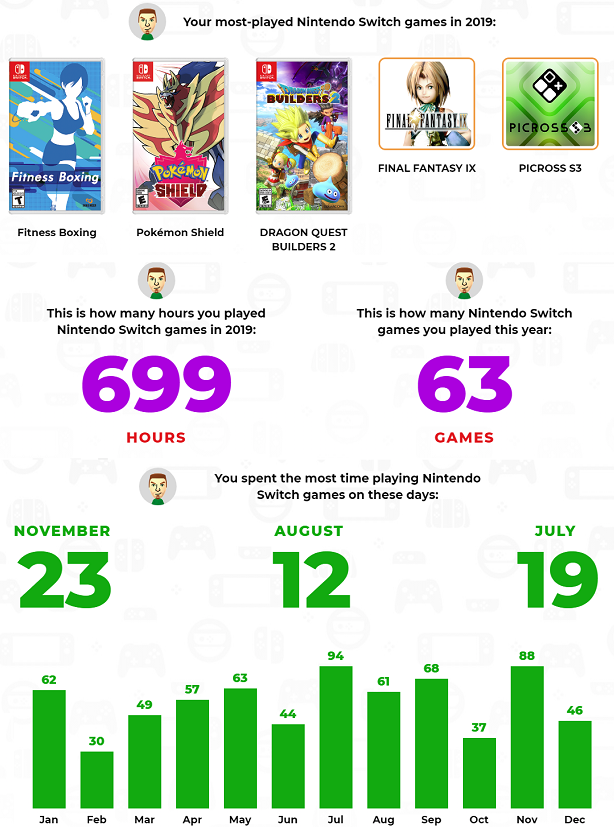
This year, Nintendo created a fun little widget for their website that shows some basic stats on all the Switch games you’ve played throughout 2019. Or, most of the Switch games, anyway. More on that later. First, let’s have a look-see at the dirt it’s got on me.

Generally speaking, I have no idea how accurate any of these stats really are. 699 hours? Sure, okay. And that includes probably over 150 if you combine the time logged on Fitness Boxing and Ring Fit Adventure, so that makes me feel better about that really big-looking number. Though really, there are roughly 2,920 hours of “free time” in a year (assuming you spend 8 hours a day at work, 8 hours sleeping, and 8 hours free), so spending 24% of it on Nintendo games ain’t so bad. I like when percentages make me feel better about my life choices. (Let’s not consider how many hours PS4 and PC games would add to that tally.)

Moving on, 63 different games played is probably pretty on-the-nose. I could go back over the Monthend Wrap-Ups to put it to the test, but ehhhhh that would be time consuming and I don’t really care. Maybe later.

As for the specific days when I played the most? November 23 is due to Pokémon Shield, no doubt. Easy. I’m actually surprised it wasn’t on launch weekend, to be honest. The days in July and August, though? Those are tougher. In July, I must have spent like a whole day playing Picross S3 or something, because I really don’t know what else it would be. That would also tie in with the individual game rankings. And the date in August I’m pretty sure must have been one of the days I was on vacation and stayed up all night playing Dragon Quest Builders 2. Yeah, there was more than one of those. I really loved DQB2.

So here’s where I really want to pick: the top 5 games played. Fitness Boxing and DQB2 absolutely belong there. Pokémon Shield probably earned its spot as well, even though it came out really late in the year. IGT says I’ve played for just over 63 hours. But I really wonder if Picross S3 and Final Fantasy IX belong. I played a lot of Monster Hunter Generations Ultimate in 2019, and I think that Ring Fit Adventure probably should have cracked the list as well. Heck, I’m pretty sure I spent more time with the Youtube app open after falling asleep than I did playing Picross S3. I adore Picross and all, but it doesn’t take me very long to burn through those games. But maybe the YouTube app wasn’t counted? Who knows!

Anyhow, that’s what Nintendo’s robots picked up on me, and who am I to argue? I’ll have some of my own numbers coming in next month, so stay tuned for that!

Oh right, and Happy New Year!!

Rogue Legacy and why I don’t like roguelikes

Nintendo – and every other seller of goods in the world – had a big ol’ Black Friday sale recently, which naturally included a whole bunch of eShop titles. But I didn’t buy any of Nintendo’s games. No, I spent my money on a couple of indie games, and finally purchased Starlink: Battle for Atlas, which I’ve been putting off since it came out. I only now cracked because the complete edition (with all DLC) was marked down ridiculously low.

But that’s not what I really want to talk about today. I want to talk about one of the previously mentioned indie games: Rogue Legacy. This game came out ages ago on PC, and I tried playing it a little, but my system just couldn’t bear the weight of its… 16-bit graphics. So I really was only able to get a tiny taste of what it was like, which did manage to stick it in my brain, prompting me to wishlist the Switch version when it was released many years later. And then I bought it once it hit an appropriately low sale price.

Playing Rogue Legacy again has really reminded me of why I gave up on roguelikes so long ago. There was a time when I was into them, mostly because Jeremy Parish said I should be, and I was more than happy to pour hours into game like Shiren the Wanderer, Izuna: Legend of the Unemployed Ninja, and Spelunky. Over time, though, I realized that I don’t much care for this style of game. Now, that’s not to say that I can’t appreciate a game that has roguelike elements, but at the end of the day, it’s just not a genre that I have much fun with.

I think it’s worth examining exactly why it is that I don’t care for these games, so let’s start with the most obvious point: Permadeath. This means that when you die, you start the game over again. No checkpoints, no saves. Back to the beginning for you. Better luck next time. This is nothing special, since this “feature” has been around since the days of Space Invaders. The difference, of course, is that roguelikes are typically adventures that have a set ending point, rather than just having you chase high scores. And I don’t mind it. It seems like a lot of roguelikes are actually very short to accommodate this rule, since it would suck hard to get 10 hours into a game only to die and lose it all. So we’re just going to scratch permadeath off the list of things that I dislike about the roguelike genre.

Digging a little deeper, we get to the next really big one: random world generation. Or at the very least, random dungeon generation. Also known as procedural generation, this tactic of letting the game design the levels for you have been every indie developer’s go-to design philosophy for the last few years. And in some cases, it’s fine. Minecraft would lose a vast majority of its magic if it were the same world for every player, every time. When developers design rooms and then let the game string them together, that’s not too bad either. I fell hard for Chasm last year, going to far as to declare it one of my favourite games of 2018.

But when the whole game is created by a random number generator with a questionable amount of logic to work with, things can go horribly awry. The premise of a different game layout every time you play can certainly seem appealing, but then you realize that it’s more likely to screw you over than anything. Maybe you don’t get any helpful items for like 5 floors/levels. Maybe the whole floor is spikes and there’s nothing to jump on so you can get across. Maybe there’s an invisible instant-death trap right next to your starting point and it’s just over. Nothing feels like more of a waste of time than losing runs to simple bad luck. I don’t mind losing because my skill isn’t up to snuff, or I made a stupid mistake. But losing because my hunger meter was empty and the game didn’t give me any apples to replenish it is very close to infuriating.

All that is to say that I will always prefer playing a game with human-designed levels. I want every tile or polygon to be there for a reason. I want to know that I have been allowed the proper resources to deal with the challenges I’m going to face. If I squander those resources irresponsibly? That’s on me. And I get that it takes more time and resources to hand-craft levels and dungeons, but I truly think the final product is consistently better when you don’t leave it up to a computer.

I’d also like to make an aside about those invisible traps I mentioned before. What kind of garbage is that? You step on the wrong tile and then suddenly you’re poisoned or seventeen monsters spawn around you? That’s just mean. Not fun. Nothing about that is fun. Nuts to you, any developer that uses invisible traps.

Another thing that drives me up the wall is “unidentified” items. Basically, you pick up this question mark item, and you need another item to identify it. Or maybe sometimes your character has to have a certain intelligence stat or something. I think that in a roguelike setting, these are really aggravating, mostly because they seem to be super common (or maybe it’s just my bad luck). It’s not so bad when you can go to a town and restock on magnifying glasses or whatever bauble it is that identifies things. But when you’re stuck hoping that these things will randomly spawn somewhere? Nuts to that. Just… all the nuts to it. Then when you finally identify the thing, it turns out to be a “scroll that causes paralysis to the user”.

Seriously, why do people like roguelikes so much?

Anyway, I guess those are my main gripes with the genre. So what was that one game that made me think about it in the first place? Oh right, Rogue Legacy. I generally do like Rogue Legacy, despite its lineage. But mostly for the things that separate it from the standard roguelike. For one, it’s a Castlevania-inspired platformer instead of a turn-based-RPG. That’s already a big win in my book. Not that I have a problem with RPGs, but platformers are my jam.

Rogue Legacy does make use of a lot of the usual roguelike elements. The castle you’re adventuring through is randomly generated every time you enter, and you lose all progress whenever you die. It doesn’t throw in any mystery items, which is nice, but items are barely even a thing here anyway. What sort of makes up for that randomness is that every time you die, you have to choose from three randomly-generated characters for your next run. Each one has a name, class, trait, and subweapon assigned… randomly. I feel like once I’m done writing this, I’m going to hate the word “random” more than ever.

Your guy/gal’s name is inconsequential. Their class determines their stat distribution and special ability. The subweapon is picked from a pool of maybe half a dozen, mostly based on classic Castlevania subweapons. Lastly, and most importantly, is the trait. Your character is given a trait (or sometimes two or sometimes none) that acts as a modifier for that particular run. If your guy is “nostalgic”, the screen will get a sepia overlay. If they suffer from gigantism, their sprite will be larger than usual. If they have vertigo, the entire game will be flipped upside-down. If they’re gay… I don’t think it actually changes anything. It’s a weird inclusion, but I think it’s an awkward way of trying to say that it’s perfectly normal to be gay?

The thing I like about this system is that you can always choose from a pool of three characters. You’re never stuck with a bad trait, and even if all three have traits you don’t like, you can choose the one that’s least offensive. It’s a way to include an element of randomness while letting the player still feel like they have a little say in how their experience unfolds. The game even tells you what each trait does before you pick it, and I really appreciate that transparency. Though in all honesty, some of the descriptions are less helpful than others. And it seems that sometimes you get a trait that isn’t listed on the character sheet… but usually it it’s one of the more benign, “funny” ones, like IBS or Coprolalia.

The major thing that Rogue Legacy does to deviate from a traditional roguelike is the fact that it lets you make permanent progress. While you lose your progress in the castle every time you die, you get to keep all the money you found, and that can be spent on permanent character upgrades. There are some that boost your base stats, some that unlock class upgrades, and some that do other things, like hiring NPCs that can give you even more power-ups.

While this may sound like it could be a little broken, Cellar Door Games did a really good job of balancing it. You lose all unspent money upon entering the castle, which keeps it from becoming a money grind to afford the next power-up. No, you’ve actually got to have a good enough run to collect all that gold in one go. So while you do gain passive bonuses over time, there’ s still an incentive to actually get better at playing the game. Even if you don’t collect a lot of money, there are permanent upgrades hidden in chests. So maybe all your run amounted to was finding a blueprint for a new set of boots, but at least you got that cool thing, and you get to keep it! Celebrate the small victories!

The problem with it is that since such a big part of the game is building your character up, there’s basically no way that you’ll be able to have a winning run early on. Bosses are much too strong, and even some of the regular enemies can ruin your day real fast if you haven’t made any significant HP gains. Absolutely there are crazy people out there who can do low-level runs, but that’s not for the common man. No, we’ll have to get in at least thirty or forty losses before a win even becomes viable. But I’m fine with that. I like the number-go-up of RPGs, and having to actually earn those numbers-ups with skillful play feels very satisfying.

The other thing that’s permanent is that when you kill a boss, it stays dead. This is a wonderful boon, as the bosses are already crazy hard, and trying to kill them all in a single run would drive me mad. Bosses give out a massive amount of money (and a fistful of permanent stat boosts) when you kill them, and while it would be handy to be able to farm them for that big payday, that’s probably exactly why they stay dead in the first place.

With all that said, I think that the permanent progression mechanics are what keep me playing Rogue Legacy when I would have quit any other roguelike long ago. Sure, you can have a really garbage run where you die before you can collect a useful amount of coin, but generally speaking, every run will provide you with a tangible reward. Maybe it’s something as small as a +10 HP boost, or maybe you just unlocked a new piece of armor that you can’t afford, but you still get to feel like you walked away with something. I know that enthusiasts of true roguelikes like to spout the “you learn something with every run” line, but that’s only a half-truth, because if you get killed by an invisible instant death trap 25 minutes into a run, you don’t learn anything. You can’t learn to avoid invisible, random trap. You could have done everything right and died because the RNG hates you. RNG never kills you in Rogue Legacy. It can stack a room against you by spawning a dozen projectile-shooting monsters, but you’ll never die because of something you could not have possibly accounted for.

I don’t know if any of this what I’ve just written makes any sense, but that’s the general gist of how I feel. I tried my darnedest to get into roguelikes, but for the most part, they just don’t gel with me. I need structure and dependability. A little bit of randomness can spice things up, but when an entire game leans on it, that’s just not for me. I’m glad roguelikes exist, because I think it’s an interesting genre, and I actually really like watching others play them on YouTube or what-have-you, but I just don’t have very much fun when I play them. Fortunately, we have games like Rogue Legacy that reign in the randomness enough to make something palatable to me.

Monthend Video Game Wrap-Up: November 2019

~ Game Over ~

Star Fox (SNES) – Ran the easy route. A good way to burn half an hour.

Pixel Puzzle Collection (iOS) – Wrote this. Still playing for 200%.

Luigi’s Mansion 3 (Switch) – Having come fresh off Dark Moon, which I felt was a little lacking in certain areas, Luigi’s Mansion 3 looks like a damn masterpiece. It’s obviously not perfect, but I’m willing to suggest that it may even be better than the original. If absolutely nothing else, the cutscenes may very well be the best that Nintendo’s ever produced. LM3 is a wonderful cartoon of a game, and if it weren’t like 17 hours long I’d jump right back in for a replay.

Continue reading Monthend Video Game Wrap-Up: November 2019

Spooktober 2019 – Luigi’s Mansion: Dark Moon

Yes, I know that Spooktober is over. But I’ve been crazy busy with other things over the last couple weeks and haven’t had a chance to finish up this review, so… gimme a break?

Also I just finished playing Luigi’s Mansion 3, which is the most recent game in the series. But before I talk about that, I feel like it’s necessary to chronicle the previous game, which I completed merely a day before LM3’s release.

Luigi’s Mansion: Dark Moon is the second game in the series, a direct sequel to the original GameCube launch title. While Dark Moon was released in 2013, I didn’t actually get a copy until 2015. And even then, I didn’t start playing it until halfway through this very month. Perfect timing!

If you aren’t familiar with the series, Luigi’s Mansion puts… Luigi in a… mansion and has him hunt down and capture oodles of ghosts with a modified vacuum cleaner. Also you’re encouraged to try sucking up everything in sight to see if it shoots out a bunch of money. While the first game more or less gave you free run of a single, gigantic mansion, Dark Moon breaks it up into five smaller locations whose classification as mansions varies from “definitely a mansion” to “a mine with a small chalet above it”.

Each mansion is also further broken down into several missions and capped off with a boss stage. This is where I think Dark Moon suffers a bit. In the original game, you would end up backtracking a bit, but that’s because you needed to explore one huge location, similar to early Resident Evil games. The mission structure in Dark Moon has you revisiting the same rooms over and over again, often having to clear the rooms of ghosts or solve puzzles on each pass. Not always, but often enough that it starts to feel repetitious by the end of the first mansion. This tedium is really what kept me from truly getting into the game, and why I generally stuck to playing one mission per play session.

Oh! And the first boss is a garbage fire, but the rest of them range from inoffensive to pretty good, so I won’t come down on it too hard.

On the bright side, those are really the only things that I didn’t like about Dark Moon. Other that that, it was pretty much on par with the precedent set by the first game. Which is to say that it was a fun experience, but not one that you’d ever have to feel like you’r missing out on. The basic gameplay of “battling” ghosts is still exciting enough, even after you’ve sucked up hundreds of ghosts. Each mansion also has its own theme, and while they do fall into the standard video game environments (forest, desert, ice, etc..), there’s enough of a twist to each that they feel fresh and unique.

The puzzles within the mansions don’t really ever get all that difficult. Most of them involve rotating a fan or sucking up a false wall. Occasionally you’ll have to deal with something a little more complex, but I never once got hung up trying to figure something out. Really, I think the puzzles are just there to give you something else to do besides sucking up ghosts, so I can’t really fault them for never going past the point of ‘tricky’. Something that really stood out to me is that there are a number of missions that require you to escort a Toad around, and they are surprisingly the least tedious parts of the game. The Toads are cute and squeaky, and it’s always fun to suck them up and then blast them across the room. The whole “escort mission” thing doesn’t ever really get in the way, either, as the Toads will just follow you around as you do your thing and never cause any sort of troubles with combat.

Where the real challenge lies are in finding all of Dark Moon’s vairous collectibles. Each mansion has like… a dozen sparkly gems that are hidden away, and they’re generally behind the game’s true puzzles. So if you’re itching for a brain-bender, you may want to make it your goal to find all the gems. The reward is a little statue for each set that you complete, so it’s really more about the journey than the destination for these. Every mission also has a single Boo hidden somewhere, and capturing all the Boos in a mansion unlocks a time attack stage. Lastly, you’re ranked on your performance during each mission, on a very mobile one-to-three-stars scale. This seems like the most arduous task that Dark Moon gives you, and your effort for a perfect three-star file gets you… nothing but bragging rights.

What really shines above all else in Dark Moon is, well, Luigi. He’s so elaborately animated and full of character that it’s simply a pleasure to see all of his various reactions to whatever’s going on around him. He’s also got more voice lines than he or Mario have ever had before, and I feel that it goes a long way to giving him just that much more personality. Professor E. Gadd and all the various ghosts are fairly charming in their own ways as well, but Luigi absolutely steals the show. As he should.

At the end of the day, Luigi’s Mansion: Dark Moon is a game that is definitely worth playing. It’s fun, charming, and will absolutely scratch that OCD itch for vacuuming up every piece of the environment to see how it reacts. While the only major flaw is that it feels too segmented and repetitive because of the mission structure, I feel like that one problem really does get in the way. It really did make Dark Moon feel more like work than it should have. I think the game would have been better off just making each mansion a self-contained chapter. Yes, it would have cut down playtime by probably a third, but all that time is just spent re-clearing rooms you’ve already been through anyway. Still, I’m happy that I played it. If absolutely nothing else, it thoroughly prepared me for Luigi’s Mansion 3.

Let’s Talk About Pixel Puzzles

And by pixel puzzles, I mean off-brand Picross, of course. Because I guess Ninendo has copyrighted the Picross name? I’d never really given it any consideration before now. I always kind of assumed the puzzle style was called picross, rather than it being the brand name for Nintendo’s “nonogram” games specifically. Now I’ve done the research and know better.

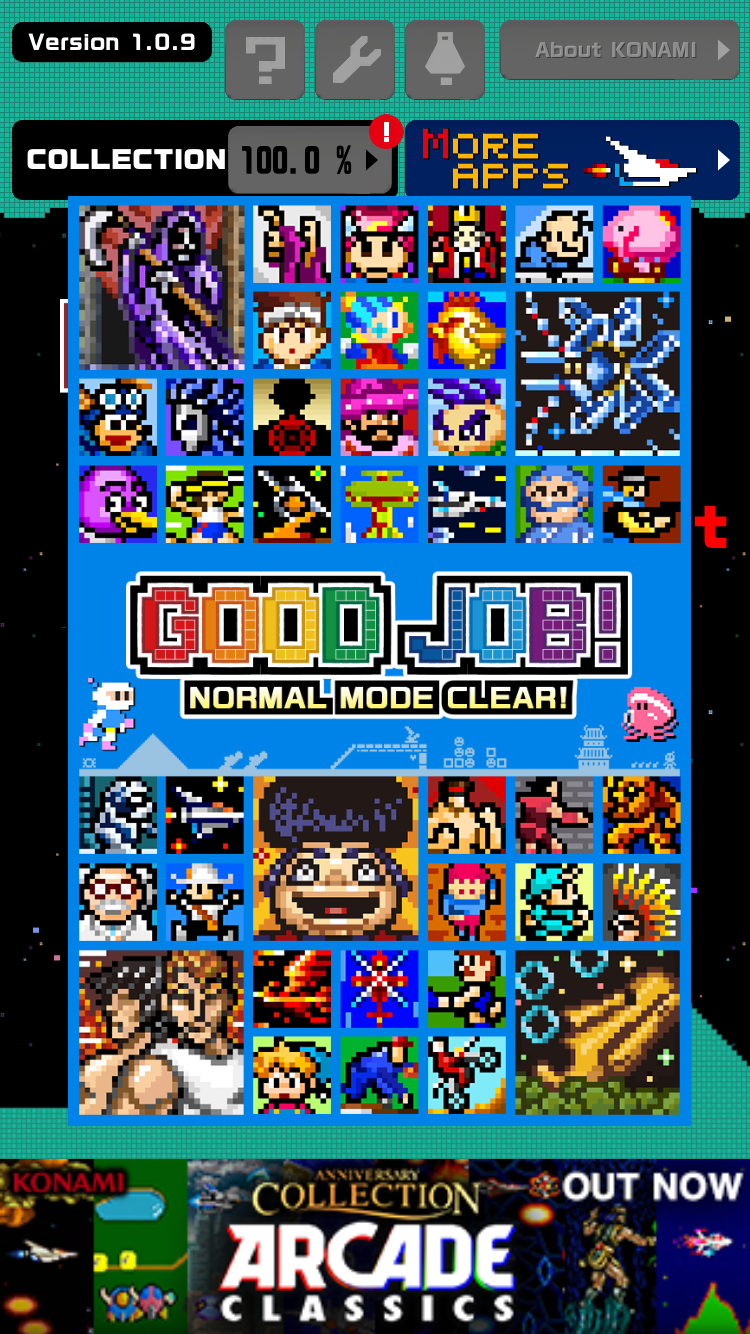
Right, so my point of focus today is, strangely enough, a mobile app. At some point in the distant past (last year?), Konami released a nonogram game for smartphones called Pixel Puzzle Collection. As you may assume from the title, it’s a collection of nonogram puzzles that, when solved, form images of sprites and whatnot from classic Konami games. You’ve got elements from huge franchises like Gradius, Castlevania, Bomberman, and Tokimeki Memorial, as well as many others. It’s a real nostalgia trip, and I appreciate the theme. I always like it when these games have a binding theme, or at least themed sets of puzzles.

Something very important to note here, is that this is one of the least greasy mobile games I’ve ever played. It’s completely free-to-play and never once will ask you for money. That’s great! The catch is that after every puzzle, they show you an ad. But it’s just an image, and you can dismiss it right away, none of this unskippable 15-second video crap that other apps love to use. The ads in Pixel Puzzle Collection are all for other Konami apps anyway, so they even sort of make sense in the context of the game. It’s the least intrusive in-app advertising I’ve ever experienced.

There are two classifications of puzzles in Pixel Puzzle Collection. The regular puzzles range from 5×5 to 15×15 grids, and are generally pretty easy to complete. They mostly reveal sprites ripped directly from Konami’s classic games, and some are parts of bigger images made of 4 panels. The other kind of puzzle is the “boss” puzzle. These are always 15×15 grids, and are typically require a little more thought. The other thing about these ones is that they’re where the free-to-play timer comes in: there’s a three-hour cooldown timer to sit through after each one you complete. It’s kind of a blessing in disguise here, as it kept me from just burning through the entire game in a week. It really made it -and excuse my crudeness- the perfect pooping game.

You’d be hard-pressed to actually finish this game in a week though, as there are a whopping 500 puzzles to solve. I don’t know what percentage of that is stuck behind the Boss Timer, but it’s probably at least 25%. It took me months to finally work my way to 100% completion. And then… it turns out that was just normal mode. WHAAAA?

Yeah, once you finish all the puzzles, you get to play in Expert mode, where you aren’t allowed to use Xs to cross off squares that definitely aren’t supposed to be filled in. (Aside: I’m just going to keep assuming you know how picross is played.) It’s not the worst problem, as there’s a feature that auto-Xs all empty squares in a row or column when you meet the number requirements on the side. It doesn’t necessarily mean that you filled them in correctly, but it’s still super helpful to have, as completing a 15×15 puzzle with no Xs would be a pain. I initially toyed around with the idea of not bothering with Expert mode, but it turns out that there are a handful of new puzzles exclusive to Expert, so off I went on my quest to 200%! It’s not like I could just cherry-pick the new ones either, because puzzles are handed out in a completely random order.

Oh and also the Boss puzzles are all free in Expert mode. No waiting three hours between them any more!

To touch on the one thing I strongly dislike about Pixel Puzzle Collection, which applies to literally every smartphone-based nonogram game: I hate playing picross on a touchscreen. The 5×5 and 10×10 puzzles aren’t so bad because they have nice, big squares to accommodate my sausage fingers. when you get to those 15x15s though, the squares are tiny and I would have gotten intensely frustrated if there hadn’t been a life-saving undo button.

At the end of the day, I really liked everything about Pixel Puzzle Collection besides its choice of platform. Finger-style touch controls just don’t work well for me, and honestly I don’t even like playing Nintendo’s Picross games with stylus touch controls. My point being that I would happily pay money to play this again if Konami released it on Switch or whatever. Touch control aside, it’s an excellent nonogram game, easily one of the best I’ve played. The fact that it’s 100% free and is also a mobile app that isn’t engineered to soak as much money as possible out of players is just the cherry on top. This one definitely put my respect for Konami up a few notches.